


Rain garden design: how Metis brought SuDS to a Critical Drainage Area on York Road
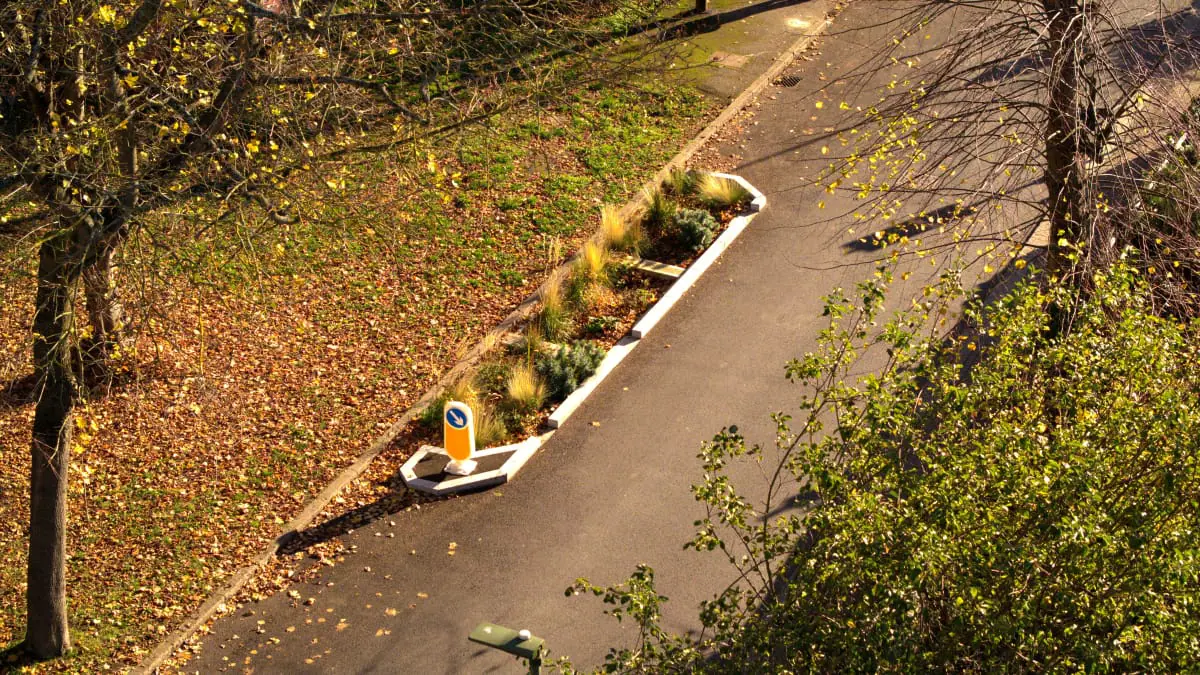
York Road is located within the Longmore Avenue Critical Drainage Area in the London Borough of Barnet. Following its earlier feasibility assessment of the wider drainage area, Metis was appointed to progress highway Sustainable Drainage System (SuDS) proposals at York Road.
The work formed part of a wider programme to improve surface water management and climate resilience through rain garden design and other planted drainage features. The completed scheme is identified among the SuDS projects delivered across Barnet to improve flood resilience. Metis developed the scheme from the findings of the initial Critical Drainage Area study through detailed design and construction information. The resulting intervention introduced a roadside rain garden that captures highway runoff, temporarily stores water and controls its onward discharge, while adding planted green infrastructure to the streetscape.
The challenge
York Road lies within a recognised Critical Drainage Area. The existing highway and conventional drainage system are vulnerable to the effects of intense rainfall and surface water runoff. The challenge was to introduce additional drainage capacity within a constrained, operational residential street without compromising access, pedestrian movement or highway safety.
The design also needed to respond to the practical constraints commonly encountered when retrofitting SuDS into an existing highway. These included buried utilities, existing gullies and drainage connections, limited verge and footway space, traffic management requirements and long-term maintenance access.
The challenge included:
- designing a rain garden within the constrained highway environment
- intercepting runoff while maintaining safe movement for residents, pedestrians and road users
- avoiding buried services and reducing the need for disruptive utility diversions
- retaining existing footway widths
- integrating the rain garden with the existing drainage network
- managing the risks associated with ponding, sediment accumulation, visibility and construction within a live highway
- providing a maintainable planted asset that could perform effectively over the long term
Finally, the design package included road markings and signage – provided by Metis’s highways team. These ensured the highway was up to standard post-construction. Originally, there had been a paved traffic island near the proposed SuDS. Metis therefore designed the rain garden to replace the traffic island as a road calming measure.
Our approach to rain garden design
Metis combined feasibility assessment, drainage modelling, detailed civil engineering design and health and safety risk management to develop a practical highway SuDS scheme.
Feasibility and site assessment
The work built on an earlier feasibility study commissioned by the London Borough of Barnet and TKJV for the wider Longmore Avenue Critical Drainage Area. This study identified potential opportunities for roadside rain gardens and surface-water storage, including options on the eastern side of York Road and close to the junction with Longmore Avenue.
To confirm the constraints affecting delivery, C2 utility-record searches and a ground-penetrating radar utility survey were undertaken. The proposed feature locations were then selected to avoid buried services in the footway wherever possible.
Drainage design and modelling
Metis developed and tested the hydraulic performance of the rain garden design proposals across a range of rainfall events, including climate change scenarios. The design incorporated a maximum surface ponding depth of 150 mm and considered performance for events ranging from the 1-in-2-year storm through to the 1-in-100-year storm with climate-change allowances.
The rain garden was designed to intercept runoff from the highway and manage it through temporary surface storage, engineered drainage layers and controlled discharge. Existing drainage connections were reused where practicable. This minimised the extent of new below-ground infrastructure, and reduced works within the carriageway and footway.
Detailed design and construction information
Metis prepared the detailed design and construction information required to move the proposal into delivery. This included:
- general arrangement and construction drawings
- rain garden levels, earthworks and interface details
- hydraulic calculations and modelling outputs
- drainage connections and outlet arrangements
- planting and landscape requirements
- designer risk assessments and risk registers
- pre-construction information
- construction-stage health and safety information.
- maintenance requirements for the completed SuDS asset
The rain garden locations were developed so that existing footway widths would not be reduced. The design also addressed visibility for road users, construction risks, sediment blockages and the need to protect residents and site personnel during the works.
Construction and handover support
The scheme progressed to construction during autumn 2025. Metis supported the transition from design to construction; we provided for-construction information and addressed the practical requirements associated with implementing a planted drainage feature in a live highway.
Our maintenance plan and planting schedule also provided the basis for regular inspection, vegetation management, sediment removal and the continued operation of the inlet and outlet arrangements.
Outcomes and value delivered
The York Road rain garden design has delivered a nature-based drainage intervention within an established residential highway. The completed scheme forms part of Barnet’s wider programme of SuDS projects, intended to improve flood resilience across the borough.
With Metis’s specialist support, the project delivered:
- a new roadside rain garden to intercept and manage surface water runoff
- additional temporary storage that slows the movement of water into the conventional drainage system
- improved local flood resilience within the Longmore Avenue Critical Drainage Area
- retention and reuse of existing drainage connections where possible
- a design that avoids buried services and maintains existing footway widths
- improved water-quality treatment through planted and engineered soil layers
- new green infrastructure that enhances the roadside environment and supports biodiversity
- a coordinated design, risk-management and construction-information package
- a framework for the scheme’s continuing inspection and maintenance
The project demonstrates how targeted highway SuDS can transform small areas of roadside space into functional drainage infrastructure. By combining hydraulic engineering, highway design and landscape-led surface-water management, Metis helped the London Borough of Barnet deliver a practical and replicable response to urban flood risk.
Metis brings extensive experience in highway SuDS, drainage modelling, flood-risk management and the development of construction-ready design packages for local authorities. At York Road, this integrated approach enabled a constrained highway location to provide improved surface water management alongside environmental and streetscape benefits.
Interested in learning more about our work?
Explore some of our other Metis case studies to discover our recent projects.
If you’re seeking an experienced and passionate engineering team to partner with on your next project, get in touch with us today.
Related Projects

Metis helps East Sussex Council to secure £15M funding
Sussex’s carriageways play a key role in enabling the efficient movement of people and freight through the county and directly contribute to East Sussex County Council’s (ESCC) economic, social, and environmental development and growth strategy plan.

Highway investment planning: how Metis secured funding for Richmond-upon-Thames
Our work helps Richmond to understand long-term maintenance pressures, and make the case for increased capital funding.